Introduction
Coloring is more than a simple pastime — it’s a low-cost, accessible activity that supports learning, emotional regulation and creativity across all ages. Below we break down the main benefits and give practical tips for parents, teachers and adults who want to use coloring intentionally.
Benefits for children
Fine motor skills & coordination
Coloring helps develop the pincer grip, hand–eye coordination and control of small muscles — all essential for early writing and precise tasks. Short, frequent coloring activities are especially effective for toddlers and preschoolers.
Cognitive development
Choosing colors, following patterns and completing an image exercises planning, spatial awareness and early decision-making. Simple exercises like color-by-number can also reinforce number recognition and instructions following.
Social & emotional advantages
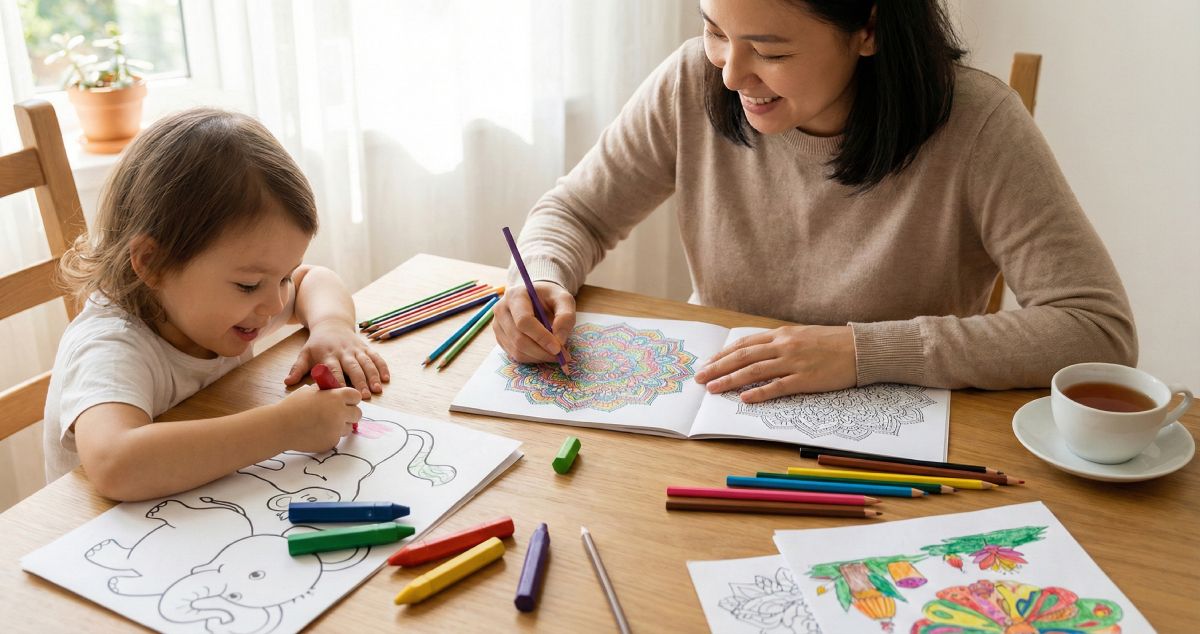
- Calming shared activity that fosters communication and bonding.
- Opportunities to express feelings through color and imagery.
- Encourages patience and concentration in short, achievable tasks.
Benefits for adults
For grown-ups, coloring is increasingly used as a form of everyday mindfulness. The repetitive, focused action of filling shapes redirects attention away from stressful thoughts and promotes relaxation.
“Even a 10–15 minute coloring break can reduce mental tension and improve mood.”
How it helps
- Reduces rumination by engaging the hands and attention.
- Provides a predictable, low-stakes creative task that lowers cognitive load.
- Can be combined with breathing exercises for deeper relaxation.
Educational uses
Teachers and caregivers can easily adapt coloring pages to curriculum goals:
- Literacy: color letters or word-based illustrations.
- Numeracy: color-by-number activities for counting and arithmetic.
- Thematic learning: use season- or topic-based pages to reinforce lessons.
Practical tips
- Keep materials simple: crayons or colored pencils and a stack of paper are enough to start.
- Create short routines: 10–20 minutes after school or before bed works well for kids.
- Encourage exploration: let children choose colors and try different techniques.
- Use group projects: collaborative coloring builds social skills in classrooms.
Takeaway
Coloring is a versatile activity with measurable benefits: it supports motor and cognitive development in children, offers a mindful break for adults, and provides a flexible tool for educators. With minimal equipment and a little planning, coloring can become a meaningful part of home routines, classroom practice and personal wellbeing.
Try adding a 10-minute coloring break this week — small habits add up.