More Than Just Filling in Lines: The Parent’s Perspective
In a world of high-speed tablets and endless streaming, the humble coloring book remains one of the most powerful tools in a parent's arsenal. But here’s the secret: coloring isn't just about keeping your child occupied while you finish a cup of coffee. It is a fundamental building block for physical, cognitive, and emotional development.
When you sit down with your child and a box of crayons, you aren't just making a mess—you’re building a foundation for life.
1. The Developmental "Superpowers" of Coloring
Every time your child grips a crayon and tries to stay within (or intentionally outside) the lines, several things are happening at once:
- Fine Motor Strength: Coloring develops the "tripod grip," the same finger strength required for writing with a pen and using cutlery.
- Hand-Eye Coordination: Navigating the tip of a pencil through an intricate design trains the brain and hands to work in perfect sync.
- Spatial Awareness: Understanding boundaries, shapes, and the relationship between different objects on a page is the first step toward visual literacy.
2. Strengthening the Parent-Child Bond
Coloring is a "low-demand" activity. Unlike a board game where there are winners and losers, or homework where there are right and wrong answers, coloring is a neutral ground. This makes it the perfect environment for organic conversation.
"The best conversations with my six-year-old happen when our eyes are on the paper and our hands are busy. The lack of direct eye contact makes him feel safe to share his big feelings."
By coloring with your child—not just watching them—you show them that their interests are valuable. You aren't the teacher or the boss in that moment; you are a co-creator.
3. Creating Peaceful Daily Rituals
Consistency is key for children. Integrating coloring into your daily routine can help manage the chaotic transitions of a typical day. Consider these two "Coloring Rituals":
The After-School Decompression
Moving from the high-energy environment of school to the quiet of home can be jarring. A 15-minute coloring session at the kitchen table allows your child’s nervous system to "downshift" before they start homework or chores.
The Pre-Bedtime Peace
Replace the "blue light" of a screen with the tactile feel of paper. Coloring promotes the production of melatonin by avoiding the harsh light of TVs and tablets, making the transition to sleep much smoother.
4. Practical Tips for Stress-Free Creativity
- Focus on Process, Not Product: Avoid saying "That’s a beautiful tree." Instead, try "I love how much effort you put into choosing those shades of purple." Focus on their choices and focus.
- Don't Correct the Colors: If they want to color the sun blue and the grass pink, let them. This is their world where they have total autonomy—something children rarely get in real life.
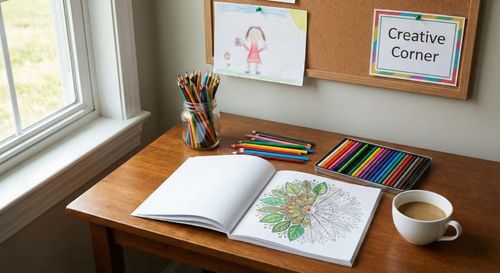
- Keep Supplies Accessible: Have a "coloring station" with paper and washable markers ready to go. If it’s easy to start, they are more likely to choose it over a screen.
Conclusion: A Colorful Investment
The drawings on your refrigerator will eventually be replaced, but the skills and memories built during those coloring sessions will last forever. By making coloring a central part of your family’s life, you are giving your child the tools to focus, create, and regulate their emotions—one crayon at a time.