Creativity as a Muscle: The Power of Habit
Most people treat creativity like a lightning strike—something that either happens or it doesn't. But as we navigate the hyper-digital landscape of 2026, we’ve learned that creativity is more like a muscle: it requires regular exercise to stay strong. Introducing coloring into daily life at home or school isn't just about art; it’s about building a consistent mental anchor that fosters focus and calm.
The secret to a lasting habit isn't willpower; it's environment design. Here is how to make coloring an effortless part of the day.
1. Home: Making Creativity the "Default"
If your coloring supplies are tucked away in a high cupboard, the habit will never stick. To build a habit, you must reduce "friction."
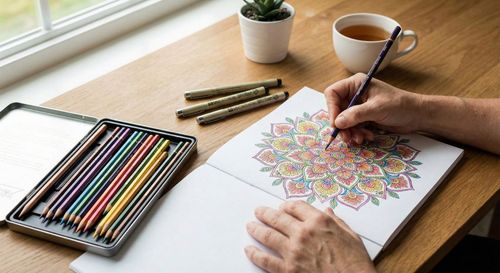
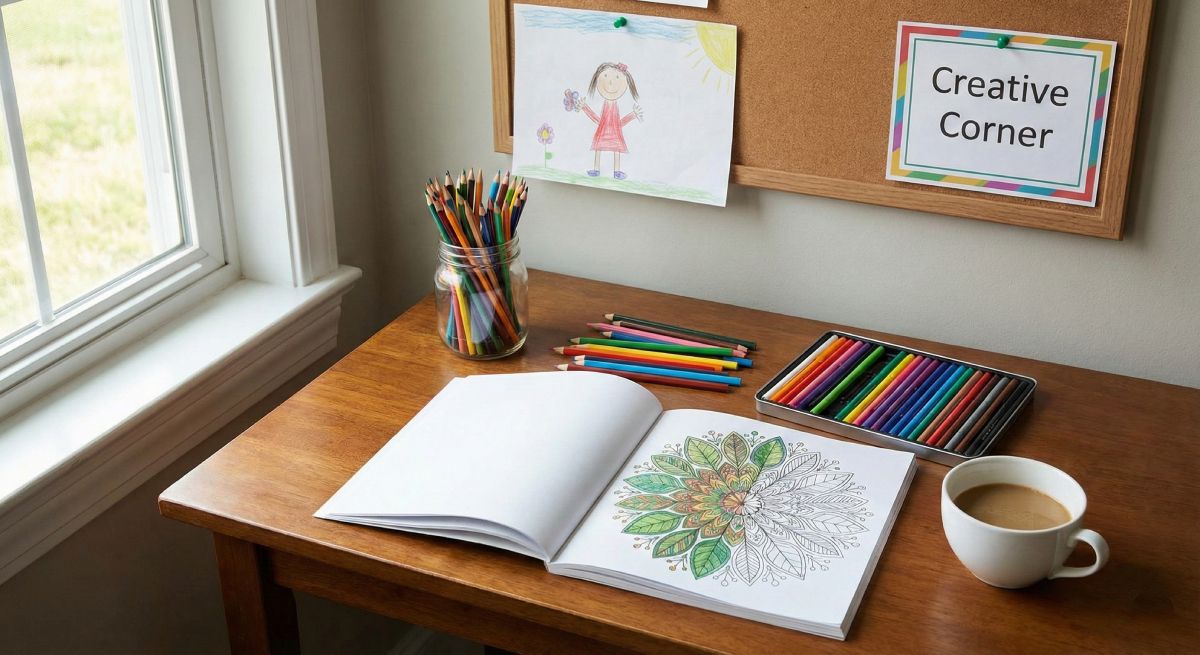
- The "Open Book" Strategy: Keep a coloring book open on the coffee table or kitchen island with a few pencils already sharpened. When it’s visible and ready, it’s much easier to spend five minutes coloring than to pick up a phone.
- The 5-Minute Rule: Encourage family members to color for just five minutes. Often, the hardest part is starting. Once the pencil touches the paper, five minutes usually turns into twenty.
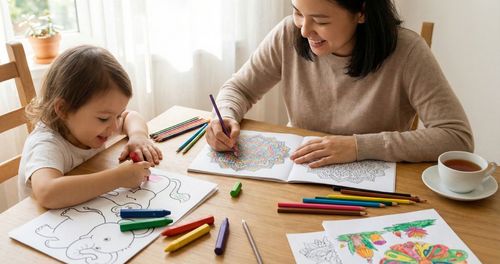
- Joint Rituals: Set a specific time—perhaps right after dinner—where everyone sits together for "Quiet Color Time." No screens, just the sound of pencils on paper and light conversation.
2. School: Integrating Coloring into the Curriculum
In the classroom, coloring shouldn't be seen as "filler" work for students who finish early. Instead, it can be a strategic tool for cognitive regulation.
The "Brain Break" Station
Dedicate a corner of the classroom to a communal coloring project—a giant wall poster or a station with individual sheets. When a student feels overwhelmed or "stuck" on a task, a 3-minute coloring break can reset their nervous system and improve problem-solving.
Cross-Curricular Coloring
Coloring can be a powerful mnemonic device.
| Subject | Coloring Integration |
|---|---|
| History | Coloring historical maps or period-accurate clothing to visualize the era. |
| Science | Coloring detailed diagrams of cells or anatomy to reinforce memory through tactile learning. |
| Literature | Illustrating scenes or "color-coding" character emotions in a narrative. |
3. Overcoming "Creative Resistance"
Many children (and adults) stop coloring because they fear making a mistake. To build a habit, you must remove the pressure of the "final product."
"The goal of a creative habit is the practice, not the masterpiece. A messy, half-finished page represents a brain that had a moment of peace."
- Process-Oriented Feedback: Instead of saying "That looks great," try "I noticed you were really focused while working on that pattern."
- Low-Stakes Materials: Use erasable pencils or washable markers. Knowing that a "mistake" isn't permanent makes people more likely to experiment.
Conclusion: The Long-Term Reward
When we make coloring a habit at home and school, we are teaching more than just art. We are teaching patience, discipline, and the value of slow work. In an era of instant gratification, the simple act of choosing a color and filling a shape is a quiet rebellion that pays dividends in mental clarity and emotional resilience.