Beyond "Keeping Them Busy": The Power of Intentionality
For many parents, a coloring book is a "lifesaver"—a tool used to grab fifteen minutes of peace to make a phone call or finish a cup of coffee. There is absolutely no shame in that! However, if we look at coloring only as a distraction, we miss out on one of the most accessible and profound ways to connect with our children. When we shift our perspective and treat coloring as a shared ritual, it transforms into a bridge between the adult world and the magical, uninhibited world of a child.
A ritual is different from a mere activity. An activity is something you *do*; a ritual is something you *experience* with heart and consistency. Here is how you can turn a few crayons and a piece of paper into a sanctuary for your relationship.
The Magic of "Side-by-Side" Communication
Psychologists have long noted that children (and even adults) often find it easier to open up when they are engaged in a task side-by-side, rather than sitting face-to-face. Direct eye contact can sometimes feel interrogatory to a child ("How was your day? What did you do?").
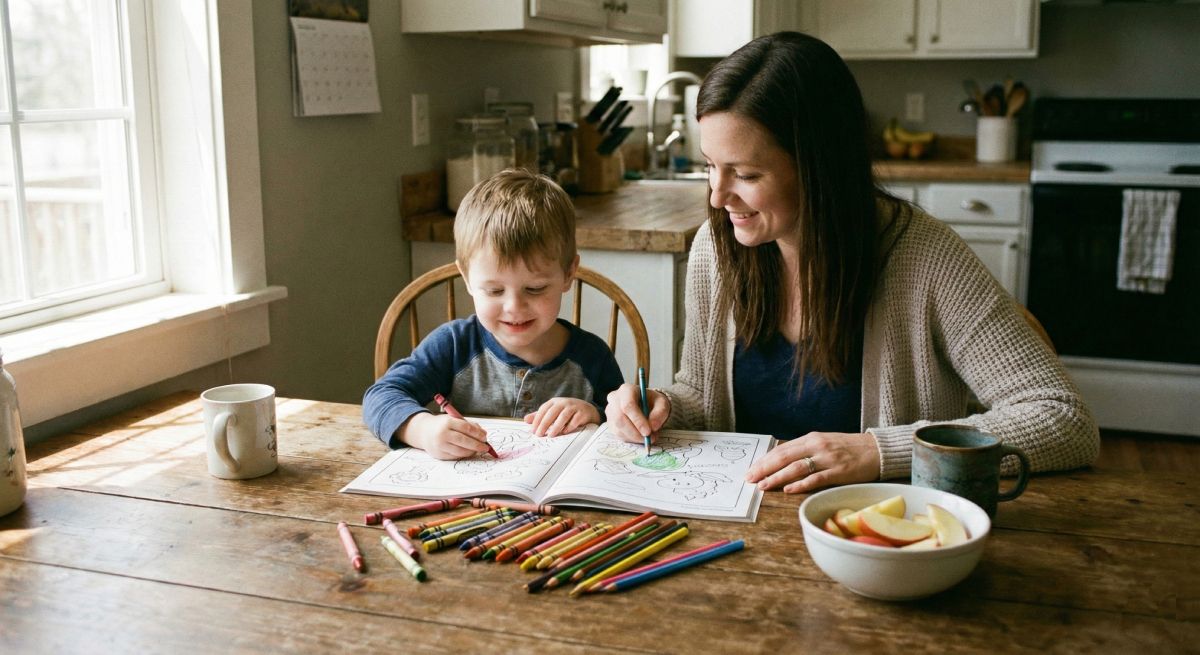
When you color together, the focus is on the paper. This lowered pressure creates a safe emotional space. As you both work on your respective "masterpieces," you’ll find that conversation flows more naturally. Your child might suddenly start talking about a playground conflict or a new dream they had, simply because their hands are busy and your presence is steady but not demanding.
How to Set the Stage for Your Ritual
To make this feel like a special ritual rather than a chore, the environment matters. It doesn’t have to be elaborate, but it should be intentional.
- The No-Phone Zone: This is the most important rule. Put your phone in another room. Your child needs to feel that they aren't competing with a screen for your attention.
- Create an Atmosphere: Put on some soft "coloring music," light a candle (if they are old enough), or prepare a special "coloring snack" like apple slices or tea.
- Color Together: Don’t just watch them color. Have your own page. When your child sees you valuing the creative process, they feel that their world is important enough for you to join.
The "Guide on the Side" Approach
One of the quickest ways to kill the magic of a coloring ritual is by being too "instructive." If you spend the time telling them to stay inside the lines or pointing out that "trees aren't purple," you turn a creative ritual into a lesson.
Instead, try the non-directive approach. If they color the sun purple, ask them, "I love that purple sun! What kind of world does it shine on?" This validates their autonomy and encourages imaginative storytelling. Your role is not to be a teacher, but a companion in their creative journey.
Conversation Starters for Coloring Time
If the silence feels a bit heavy, use gentle prompts that don't feel like "interviewing" them:
"I'm feeling very peaceful using this blue crayon. How does the color yellow make you feel today?"
Other great prompts include:
- "If you could jump inside this picture, where would you go first?"
- "What is the funniest thing that happened today that we could draw?"
- "I'm making a mistake on my page—see? It's okay, I'm just going to turn it into a cloud. Have you ever turned a mistake into something else?"
Dealing with the Mess (and the Perfectionism)
For the ritual to be valuable, it must be stress-free. If you are constantly worried about wax on the table or markers on the sleeves, the child will pick up on that tension. Choose washable supplies, use a dedicated plastic tablecloth, and embrace the chaos. The goal is the connection, not a gallery-ready piece of art. Similarly, if your child gets frustrated because they can't draw something "perfectly," use it as a moment to model self-compassion. Show them your own "imperfect" drawings and laugh about them together.
Conclusion: Building a Lifetime of Memories
Ten years from now, your child won't remember the specific dinosaur they colored on a Tuesday afternoon. What they will remember is the feeling of sitting next to you, the sound of the crayons on the paper, and the knowledge that you were truly there with them. By creating a coloring ritual, you are building a foundation of trust and open communication that will last far beyond the preschool years. So, grab a box of crayons, sit down, and let the colors lead the way to a deeper connection.