Stealth Learning: The Educational Power of Coloring
If you’ve ever tried flashcards with a four-year-old, you know it can be a struggle. Early education doesn't have to feel like work. In fact, one of the most effective tools for teaching literacy and numeracy is already in your home: educational coloring pages.
Coloring allows children to interact with abstract symbols—letters and numbers—in a low-pressure environment. It turns "study time" into creative play, making the building blocks of reading and math feel like a game.
1. Multi-Sensory Letter Recognition
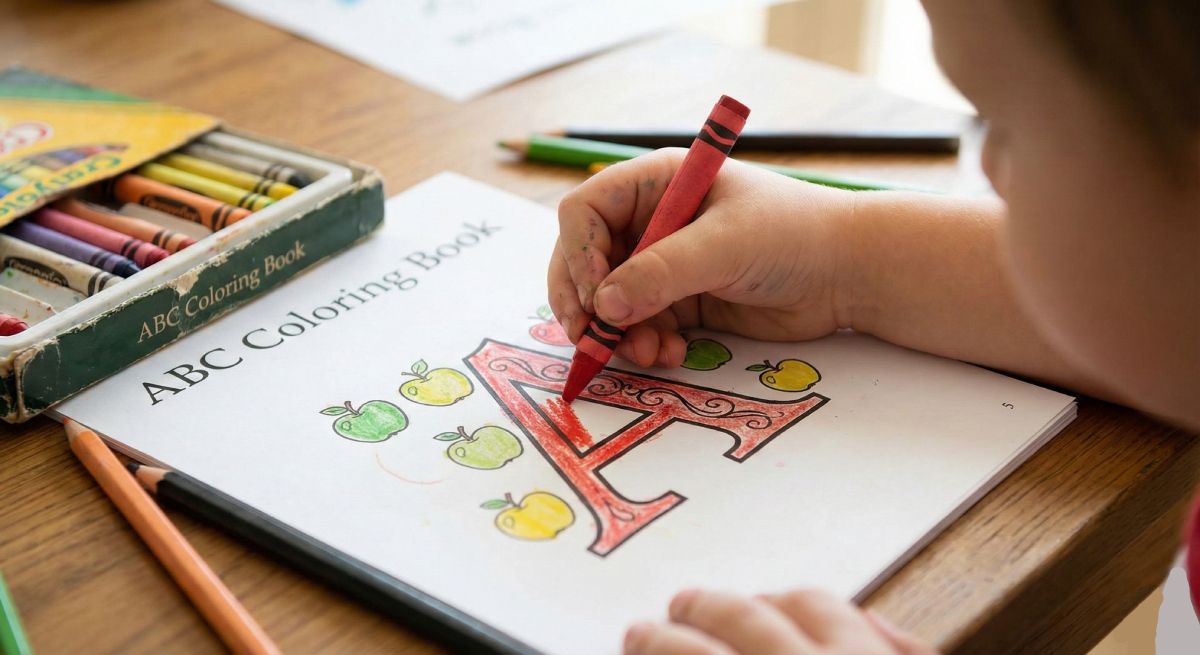
Learning the alphabet isn't just about memorizing a song; it’s about recognizing distinct shapes. When a child colors a large letter 'B', they are physically tracing its curves and lines.
- Kinesthetic Learning: The physical act of coloring helps "lock" the shape into a child's muscle memory.
- Visual Association: Most alphabet coloring pages pair a letter with an object (e.g., 'A' for Apple). Coloring both reinforces the phonics link between the symbol and the sound.
- Shape Discrimination: Differentiating between similar letters like 'b' and 'd' is a major milestone. Coloring focuses the brain on these subtle differences.
2. Building Early Math and "Number Sense"
To a young child, the symbol '5' is just a squiggle until they understand the *quantity* it represents. Coloring pages are excellent for developing this number sense.
When a child colors a page featuring the number '5' alongside five stars, they are practicing 1-to-1 correspondence. Counting the stars out loud while coloring bridges the gap between the abstract symbol (5), the word ("five"), and the actual quantity.
3. Developing Visual Memory and Focus
Success in reading and math requires strong visual memory—the ability to store and retrieve information about shapes. Coloring develops this through:
- Pattern Recognition: Recognizing repeating patterns on a page is a foundational skill for both reading (word structures) and math (sequences).
- Color-by-Number: These activities require matching a symbol to a specific instruction (a color), building the focus and cognitive skills needed for classroom learning.
4. Simple Strategies for Educational Coloring
You don't need to be a teacher to maximize the learning potential. Try these simple prompts:
- The Sound Game: While they color a letter, encourage them to make its sound. "Can you make the 'Sssss' sound while you color that snake?"
- Count as You Color: Before starting a number page, ask them to count how many items are in the picture.
- Make Connections: If you are reading a book about farm animals, find a coloring page of a cow to reinforce the theme.
Conclusion: The Stress-Free Path to School Readiness
We often separate "education" and "play," but for a preschooler, they are the same thing. By integrating letters and numbers into coloring time, you remove anxiety from learning. You show them that symbols carry meaning, and discovering that meaning is a fun, colorful process.