Beyond the Spreadsheet: When Burnout Hits a Wall
In 2026, burnout isn't just a buzzword; it’s a clinical reality for millions. When you’ve reached the point where even checking your inbox feels like climbing Everest, your brain isn't just tired—it’s overstimulated and stuck in a loop of high-cortisol "survival mode." Recovery requires more than passive rest; it requires a mental reset.
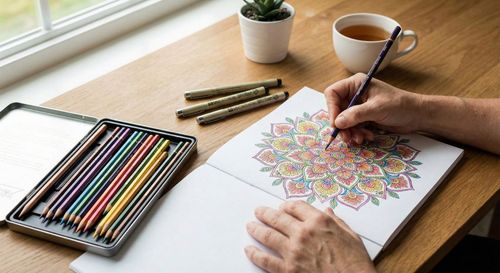
Enter coloring. While it might seem "low-tech," its ability to combat burnout lies in its simplicity. It forces the brain to shift from analytical problem-solving to rhythmic, sensory engagement.
The Science: Why Coloring Silences the Noise
Burnout often stems from a constant "cognitive load"—the weight of making hundreds of decisions daily. Coloring offers a reprieve because the big decisions (the lines) are already made for you. You only have to decide on the color.
- The Flow State: Engaging in a repetitive, creative task triggers a "flow state," where the amygdala (the brain's fear center) takes a back seat.
- Cortisol Reduction: Studies show that 20 minutes of creative expression can significantly lower cortisol levels, even in people who don't consider themselves "artistic."
- Digital Detox: It is one of the few high-engagement hobbies that requires zero screens, giving your eyes a much-needed break from blue light.
Practical Rituals for Professional Recovery
If you’re using coloring to fight burnout, you aren't just "filling in shapes"—you are practicing self-regulation. Here are three ways to integrate it into a recovery plan:
1. The "Transition" Ritual
Use coloring as a "de-escalation zone" between your work day and your personal life. Spend 15 minutes coloring before you check your personal messages or start chores. It signals to your brain that the "Shift" is over.
2. The "Non-Judgmental" Page
Burnout is often fueled by perfectionism. Combat this by intentionally coloring a page "badly." Use clashing colors. Scribble. The goal is to break the cycle of needing everything to be "productive" or "perfect."
3. The "Micro-Break"
Keep a small coloring book in your desk drawer. When a meeting leaves you feeling "fried," five minutes of coloring can reset your nervous system more effectively than scrolling through news headlines.
Real Stories: From Boardrooms to Pencil Cases
"I was a project manager on the verge of quitting. My brain wouldn't stop 'tabulating' even at dinner. I started coloring mandalas at night, and for the first time in years, the internal chatter stopped. It’s hard to worry about a Q4 spreadsheet when you’re debating which shade of teal best represents a dragon’s scale."
— Sarah J., Creative Director
Stories like Sarah’s are becoming common. Professionals in high-stress fields—medicine, law, tech—are finding that the tactile sensation of pencil on paper provides a "grounding" effect that meditation alone sometimes fails to achieve.
Conclusion: Coloring as a Radical Act of Rest
We live in a world that demands 24/7 productivity. In that context, choosing to spend an hour coloring is a radical act of self-care. It is a way of saying that your mental peace is more important than your output. If you are feeling the symptoms of burnout—irritability, cynicism, or lack of accomplishment—put down the phone, pick up a pencil, and let the colors do the heavy lifting for a while.